The FARA Bar Meets for ACI’s 7th National Forum on FARA
The FARA Forum Headlines
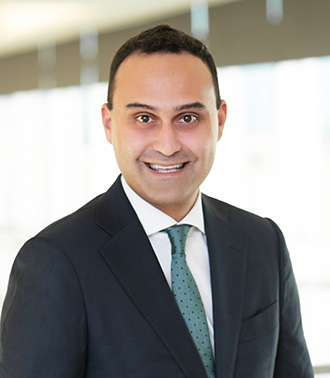
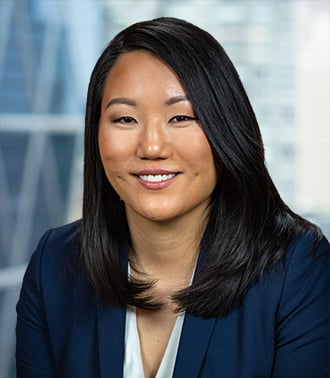
On December 5, 2025, we gathered with fellow members of the Foreign Agents Registration Act (FARA) bar for ACI’s 7th National Forum on FARA. Arnold & Porter partner and former Deputy Assistant Attorney General Eun Young Choi co-chaired the forum, which also featured Arnold & Porter partner Murad Hussain as a panelist. As in years past, participants traded insights on enforcement trends, legislative and regulatory developments, and practical strategies for navigating FARA’s persistent gray areas. But unlike in years past, the conversation unfolded without any current U.S. Department of Justice (DOJ) officials at the table.
The headlines from the forum include the following:
- The Trump administration’s posture on FARA enforcement remains in flux. Attorney General (AG) Pam Bondi’s February 5, 2025 memorandum suggested that the administration would narrow FARA enforcement to focus on civil and regulatory approaches. But President Trump’s September 2025 National Security Presidential Memorandum (NSPM-7) signaled a potentially expanded role for FARA in addressing domestic terrorism and organized political violence.
- DOJ still has not issued its long-awaited regulations designed to modernize FARA, leaving some ambiguity and uncertainty around key FARA exemptions. DOJ published a Notice of Proposed Rulemaking (NPRM) in December 2024 and the comment period ended in March 2025. Since then, DOJ has remained silent on its path forward.
- FARA exposure may be rising in non-traditional sectors such as advertising, social media influencers, nonprofits, and academic institutions.
- States are introducing a growing patchwork of “baby FARA” laws aimed at curbing foreign influence at the local level, with some states imposing broader requirements than those at the federal level.
Our Key Takeaways
Uncertainty looms. With no DOJ representatives present at the forum, practitioners were left to draw inferences from arguably contrasting policy memos and recently issued Advisory Opinions (AOs). Adding to the complexity, state-level “baby FARA” laws are popping up, federal enforcement resources appear to be diminishing, and new risk sectors — many of which are not traditionally a focus of FARA — are entering the mix.
Year in Review. Instead of the major statutory or regulatory changes many expected, this past year was defined by competing policy signals from DOJ, which has experienced substantial structural, personnel, and resource-related changes.
Regarding enforcement, the administration’s policy directives have sent mixed signals. In February 2025, on her first day in office, AG Bondi issued a memorandum signaling DOJ’s intention to limit FARA prosecutions to instances of “traditional espionage by foreign government actors,” directing DOJ’s FARA Unit to focus on “civil enforcement, regulatory initiatives, and public guidance.” Many in the FARA bar anticipated a decline in FARA enforcement activity, but then the Trump administration seemingly re-engaged FARA in NSPM-7 as a tool for addressing domestic terrorism threats. As we have previously written, NSPM-7 paid particular attention to tax-exempt organizations, including nonprofits and non-governmental organizations, highlighting potential new areas of higher risk for FARA enforcement. NSPM-7 also expressly prioritized investigations under FARA of “non-governmental organizations and American citizens residing abroad or with close ties to foreign governments, agents, citizens, foundations, or influence networks.”
Further adding to the policy ambiguity, on December 4, 2025, AG Bondi issued an operational memorandum on federal law enforcement’s implementation of NSPM-7, which we also have written about. Although the December 4 memorandum directs prosecutors to “prosecute all federal crimes encountered” during their investigations under NSPM-7 and contains an extensive set of statutes for which DOJ prosecutors are to be “particularly mindful” in charging such cases, that list does not include FARA.
Though these directives provided some (potentially conflicting) indications as to the administration’s FARA priorities, forum participants anticipated that, ultimately, prosecutors will leverage the appropriate tools in their toolkit to pursue enforcement actions aligned with the administration’s policy objectives. And those tools may or may not include FARA, depending on the facts and circumstances. Conference participants explored recent enforcement actions, such as the ongoing trial against Linda Sun in the Eastern District of New York, and the challenges in proving willfulness in a criminal FARA case. A repeated theme throughout the forum was that these legal hurdles for the prosecution, coupled with resource limitations, also may signal a shift toward more selective, targeted enforcement.
On the regulatory side, as noted, DOJ has not yet promulgated its long-anticipated regulations modernizing FARA. This has perpetuated recent ambiguity surrounding one of FARA’s most prominent exemptions, the Section 613(d)(2) exemption for “other activities not serving predominantly foreign interests.” The day’s discussions highlighted a January 2025 AO that applied this provision to exempt lobbying by a U.S. company working with a foreign company to create manufacturing-related joint ventures in the United States, where the projects would equally serve both companies’ commercial interests and the expected government outreach would not implicate any foreign government’s public or political interests. Forum participants observed that the AO’s application of Section 613(d)(2) aligns with other recent DOJ AOs, and discussed how it relates to the position that DOJ articulated at the 2023 Forum, which limited the exemption to activities benefiting a “domestic interest” and not predominantly benefiting a foreign interest. While this position was expected to be reflected in the forthcoming rule — and appeared in a March 2024 AO — the rule is not yet law. However, as one of the co-authors of this Blog post has observed elsewhere, DOJ’s emerging interpretation of Section 613(d)(2) seems to read that exemption through the lens of an older, repealed FARA provision that focused on domestic actors and activities that substantially promoted their own domestic interests.
Emerging Risk Categories. Participants also discussed a growing wave of FARA inquiries in sectors not traditionally associated with foreign influence: advertising, nonprofits, universities, and social media influencers.
In particular, participants noted that FARA issues are showing up in unexpected places for advertisers and content creators. Forum contributors observed that these sectors often engage in foreign-facing work, such as tourism promotion, which may raise the level of compliance scrutiny — particularly when the work directly benefits a foreign principal. Participants indicated that without DOJ’s new finalized rule, advertisers and influencers are left to navigate the regulatory landscape without clear guidance on the Section 613(d)(2) exemption and how FARA applies to modern social media.
Members also acknowledged that nonprofits and universities may find themselves under the microscope. NSPM-7 specifically flagged non-governmental organizations with close ties to foreign governments as possible enforcement targets. Forum participants opined that universities accepting state-owned enterprise grants — particularly where those grants support activities not aligned with current U.S. policy — also may be vulnerable to amplified attention.
Finally, the discussion also highlighted how FARA has come full circle as trade advocacy has catapulted back onto the enforcement radar. In the 1960s, aggressive foreign lobbying on import tariffs motivated the 1966 FARA amendments that created much of the law as it reads today. Given the Trump administration’s substantial emphasis on tariffs and other import/export matters, advocacy in this space — even by commercially focused private foreign associations — may trigger heightened FARA scrutiny.
State-Level FARA Legislation. While federal enforcement signals remain mixed, some states are stepping into the FARA space. Participants discussed recent enactments of state-level FARA legislation, deemed “baby FARA” laws, by Texas, Florida, and other states. Some states are even pushing beyond FARA’s disclosure limits, raising potential constitutional and other legal challenges.
* * *
Our FARA team provides a wide range of FARA advice to clients, including on registration obligations, requests for information and advisory opinions from the FARA Unit, preparing for inspections by the FARA Unit and Federal Bureau of Investigation, and navigating criminal investigations. For questions about FARA, please reach out to the authors or any of their colleagues in Arnold & Porter’s White Collar Defense & Investigations practice group.
© Arnold & Porter Kaye Scholer LLP 2025 All Rights Reserved. This Blog post is intended to be a general summary of the law and does not constitute legal advice. You should consult with counsel to determine applicable legal requirements in a specific fact situation.
Authors