Oh, the Places the False Claims Act Will Go (Even to San Diego)
The False Claims Act (FCA) has never been shy about showing up where it’s not entirely welcome. But after this year’s panel at the ABA White Collar Crime Institute, it’s clear that the statute has new destinations on its itinerary — constitutional, political, cultural — that would have seemed far-fetched just a few years ago. Oh, the places the FCA will go. San Diego is just the beginning.
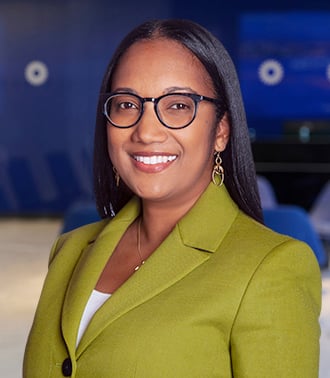
Our own Giselle Joffre joined a sharp mix of practitioners and former government officials for the discussion.
Customs Fraud: Every Import Entry Is Now a Potential False Claim
The panel kicked off with what’s become one of the hottest areas in FCA practice: customs fraud. With shifting trade policy and high-velocity tariff regimes under Sections 301, 232, and 122, the U.S. Department of Justice (DOJ) has sharpened its focus on importers who allegedly misclassify goods or otherwise evade duties. Each time an importer brings in goods through customs, they risk running into an alleged violation of the FCA. Even the Supreme Court’s recent finding that the International Emergency Economic Powers Act doesn’t authorize the administration’s tariffs hasn’t taken the pressure off — FCA risk for importers remains real and serious. The takeaway for compliance teams? Modern compliance programs must prioritize real time monitoring, digital traceability, and documentation that demonstrates good faith efforts and reasonable care.
DEI, DBE, and a Shifting Enforcement Landscape
The panel then moved into increasingly complex territory: the collision of the FCA with civil rights enforcement and Disadvantaged Business Enterprise (DBE) programs. Traditional DBE fraud — front companies, pass-throughs, sham certifications — has always been in DOJ’s crosshairs. What’s new is the current administration’s aggressive scrutiny of what it has labeled illegal Diversity, Equity, and Inclusion (DEI) practices, which has injected genuine uncertainty into the space. Contractors now face the uncomfortable task of navigating longstanding program requirements while keeping an eye on evolving federal guidance that could recast compliance efforts as liability.
The Qui Tam Clause: Headed to the Supreme Court?
One of the liveliest parts of the discussion centered on Zafirov, the constitutional challenge to the FCA’s qui tam mechanism — the provision that allows private whistleblowers to sue on the government’s behalf and collect a cut of any recovery. The panelists flagged Zafirov as a likely vehicle for Supreme Court review, and the implications could be enormous. A ruling that the qui tam structure violates the Appointments Clause or Article II would fundamentally reshape FCA enforcement as we know it. We’ll be watching this one closely.
At the same time, Kousisis has already changed the game for defendants by tightening the materiality standard. Where a defendant can show the government got what it actually bargained for, courts are now more receptive to arguments that any alleged misrepresentation didn’t really matter. The statute may be going new places, but defendants are still learning to navigate the road.
Gender-Affirming Care: Courts Push Back on the Government
And then the FCA showed up somewhere nobody expected. The panel wrapped up with a look at FCA cases targeting gender-affirming care — an emerging and unsettled area. Early rulings have quashed government subpoenas, with courts showing a real reluctance to let medical-necessity debates morph into healthcare fraud theories. The message from the bench so far seems to be: the FCA isn’t the right tool for relitigating clinical disagreements. But this area is far from settled, and practitioners advising healthcare clients need to stay ahead of it.
The Bigger Picture
What tied all of this together was a theme the panel returned to repeatedly: FCA practice today isn’t just about enforcement trends. It’s about constitutional fights, political realignments, and cultural controversies that are pushing the statute into territory nobody mapped out. If you represent companies with any federal nexus, including simply filing a customs declaration — and that’s most of them—your mountain is waiting. Oh, the places it will go! And it’s not asking for directions.
And we’re still on the road. Keep following Enforcement Edge for more from the 2026 ABA White Collar Crime Institute in San Diego.
© Arnold & Porter Kaye Scholer LLP 2026 All Rights Reserved. This Blog post is intended to be a general summary of the law and does not constitute legal advice. You should consult with counsel to determine applicable legal requirements in a specific fact situation.
Authors